Why is a powerful machine only as strong as its support?
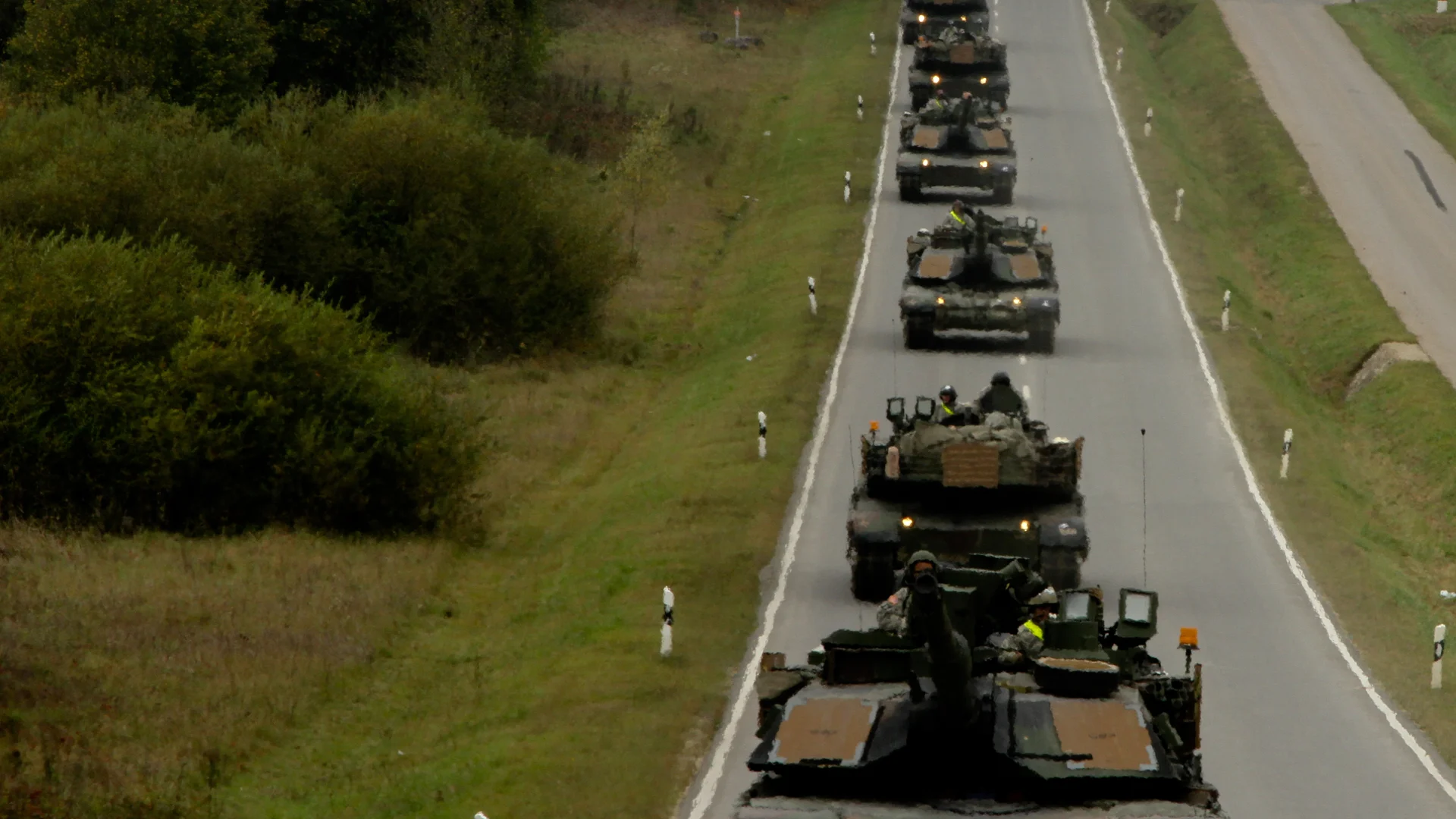
A Tank Is Only as Powerful as Its Supply Chain
Combat power is not contained inside a vehicle. It is renewed through fuel, maintenance, recovery and time.

THE FRAME FOR THIS READING
Look at the pieces,
keep the question.
This is a conceptual demonstration analysis. Its perspectives are propositions to examine, not established facts.
The variables
- Fuel and spare parts
- Maintenance and recovery
- Time and routes
Two perspectives
- A vehicle's specifications describe potential.
- Its supply network determines what it can sustain.
How long can a capability last when one link in its support chain fails?
Looking at supply reveals dependencies hidden by impressive technology.
Power outside the vehicle
A vehicle concentrates protection, mobility and firepower in a visible object. That visibility can hide the system that makes it useful. Fuel arrives from somewhere. Tracks wear. Crews need rest. Damaged vehicles need recovery before repair is even possible.
The result is a distinction between possessing equipment and generating combat power. The first can be counted in a depot. The second must be recreated every day.
Logistics changes tactics
Supply is not merely a constraint imposed after a plan has been designed. It shapes the plan from the beginning. Route capacity affects the size of a force. Maintenance intervals affect tempo. Recovery distance affects how much risk can be accepted.
A force with protected logistics can choose when to concentrate and when to disperse. A force with fragile logistics may have powerful vehicles but very few sustainable choices.
Resilience lives in the network
Efficient systems tend to remove spare capacity. Resilient systems preserve alternatives: another route, a repair team closer to the front, compatible parts or time reserved for maintenance.
Those alternatives appear wasteful until the primary method fails. The question is not how to remove every inefficiency. It is which redundancies protect the ability to continue acting when the system is under stress.
Sources
This conceptual demo article makes no sourced factual claims.
Last reviewed: . How we work
CONNECT THE IDEAS
One question leads to another.
Why does geography still shape our choices?
Why Geography Still Matters
Terrain does not decide outcomes alone. It defines which decisions are possible, when, and at what cost.